Laivadirbio skrynią atvėrus
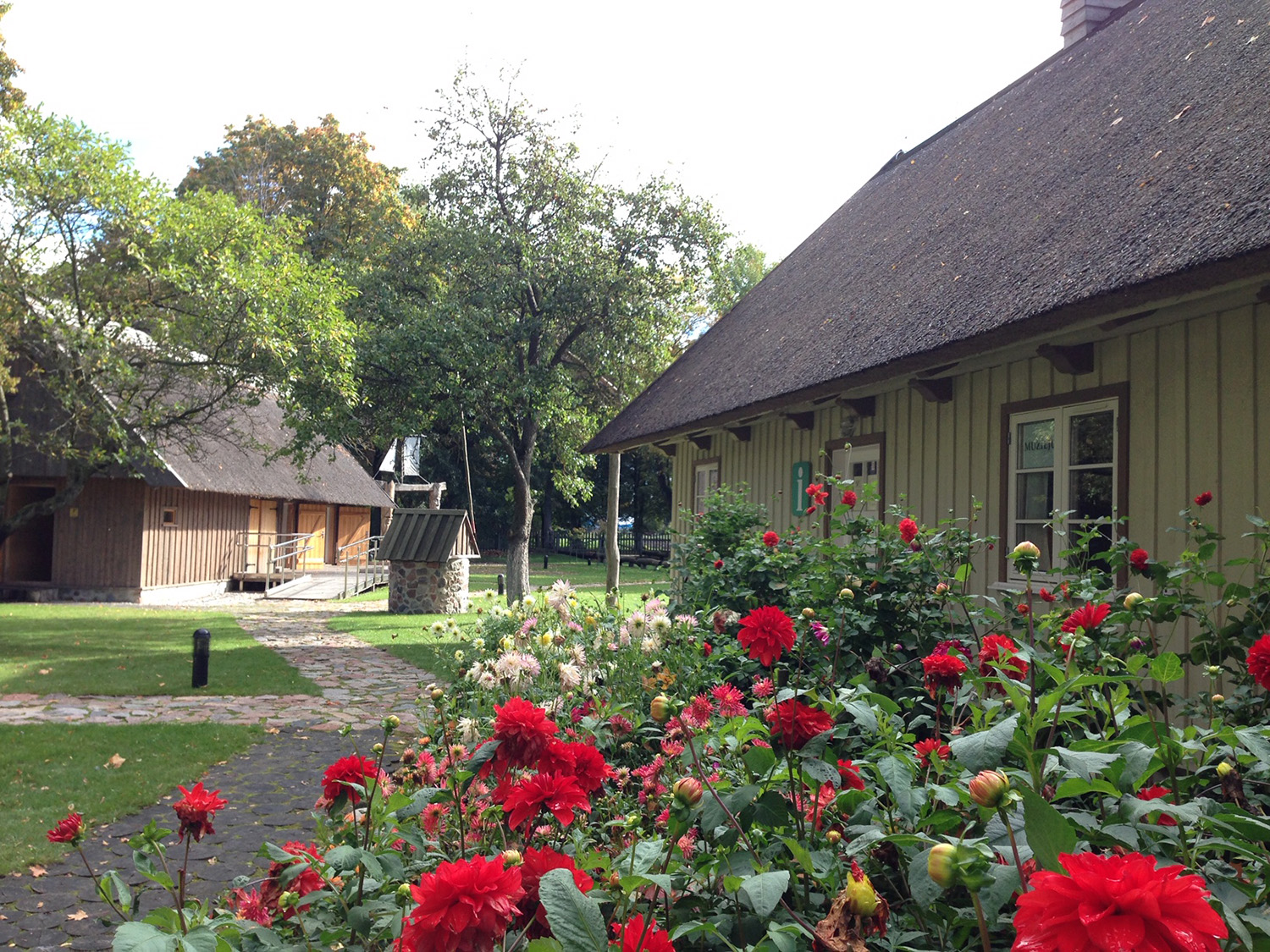
J. Gižo etnografinė sodyba – vienas iš Gargždų krašto muziejaus filialų, kviečiantis pažinti Mažosios Lietuvos pamario kultūros paveldą, tradicinę laivadirbystę ir žvejų gyvenimo būdą. Drevernoje įsikūrusi sodyba yra vienintelė Lietuvoje išlikusi laivadirbio sodyba, kurioje pristatoma Kuršių marių laivų statybos istorija, žvejybos tradicijos ir autentiškas pamario krašto gyvenimas.
Čia lankytojai gali apžiūrėti interaktyvią ekspoziciją, susipažinti su garsiausio Pamario krašto laivadirbio Jono Gižo gyvenimu, dalyvauti edukacijose ir ekskursijose bei atrasti unikalų vietos istorijos paveldą.
Muziejaus istorija
Jono Gižo etnografinė sodyba įsikūrusi Drevernoje, Žvejų g. 13. XIX a. pabaigoje–XX a. pradžioje čia gyveno ir dirbo garsiausias Pamario krašto laivadirbys Jonas Gižas (1867–1940), statęs burines žvejų valtis Kuršių marių žvejams iš Drevernos, Mingės, Juodkrantės, Nidos ir kitų pamario gyvenviečių.
Sodyba formavosi XIX a. pabaigoje. Jonas Gižas čia pasistatė gyvenamąjį namą, dirbtuves ir ūkinius pastatus, o didžiuosius laivus statydavo tiesiog Kuršių marių pakrantėje, užsakovų sodybose. Po Antrojo pasaulinio karo dalis sodybos buvo nacionalizuota, o šeimos nariai išblaškyti – sūnus Vilhelmas ištremtas į Sibirą, dalis vaikų pasitraukė į Vokietiją. Paskutinė sodybos gyventoja buvo Jono Gižo dukra Ieva, gyvenusi čia iki 1993 metų. 2010 m., restauravus sodybą, joje duris atvėrė muziejus.
Ekspozicija
Nuolatinė interaktyvi ekspozicija „J. Gižas. Laivadirbio skrynią atvėrus...“ supažindina su laivadirbio amatu, Kuršių marių burvalčių statybos tradicijomis ir pamario krašto gyvensena. Ekspoziciją sudaro keturios teminės erdvės.
Pirmojoje ekspozicijos dalyje pristatomas laivadirbio darbas – originali Jono Gižo įrankių skrynia, darbo įrankiai, medienos paruošimo technologijos, laivų statybos procesas ir Kuršių marių laivų statyklų žemėlapis. Lankytojai gali susipažinti su meistro darbo aplinka ir laivadirbystės paslaptimis.
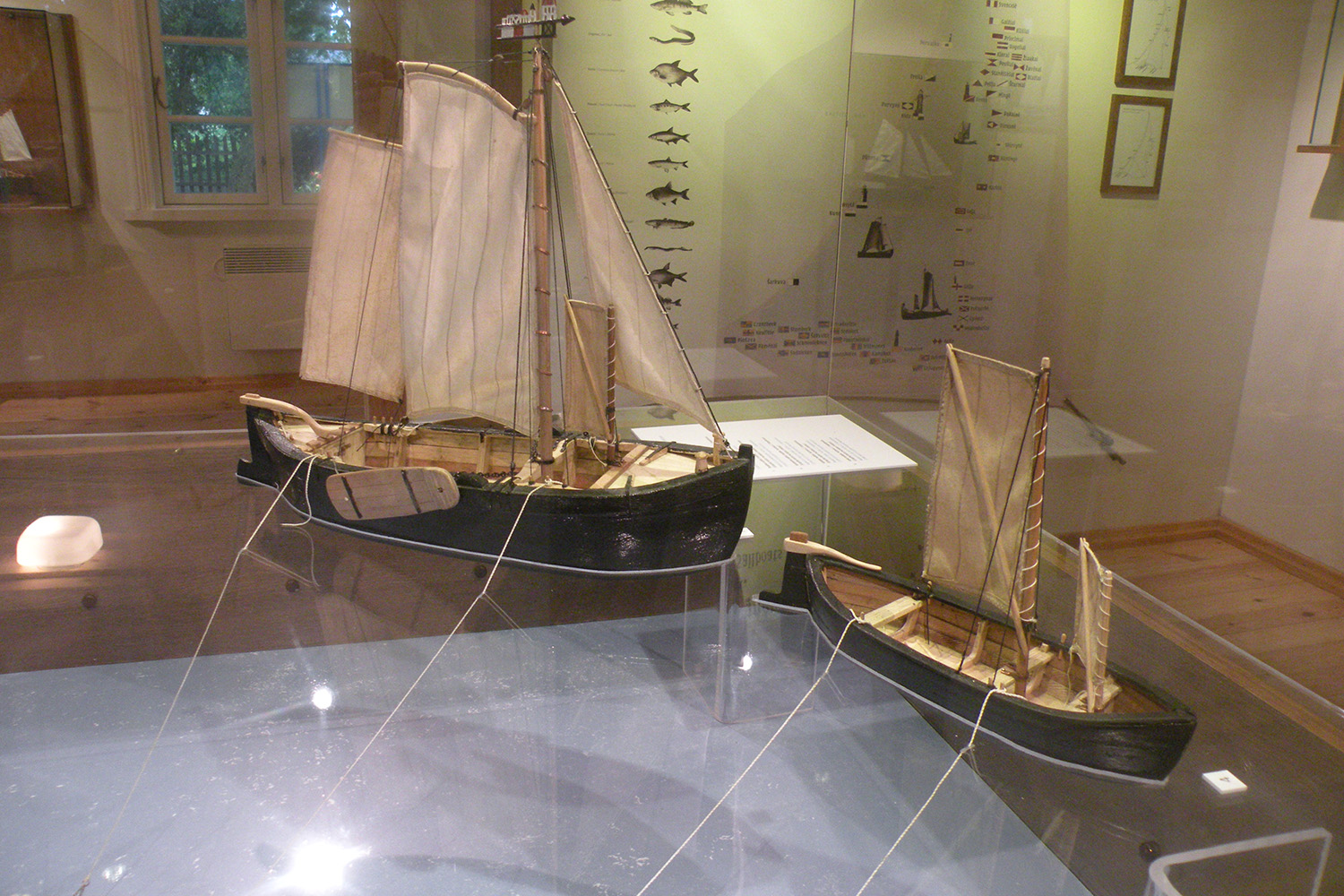
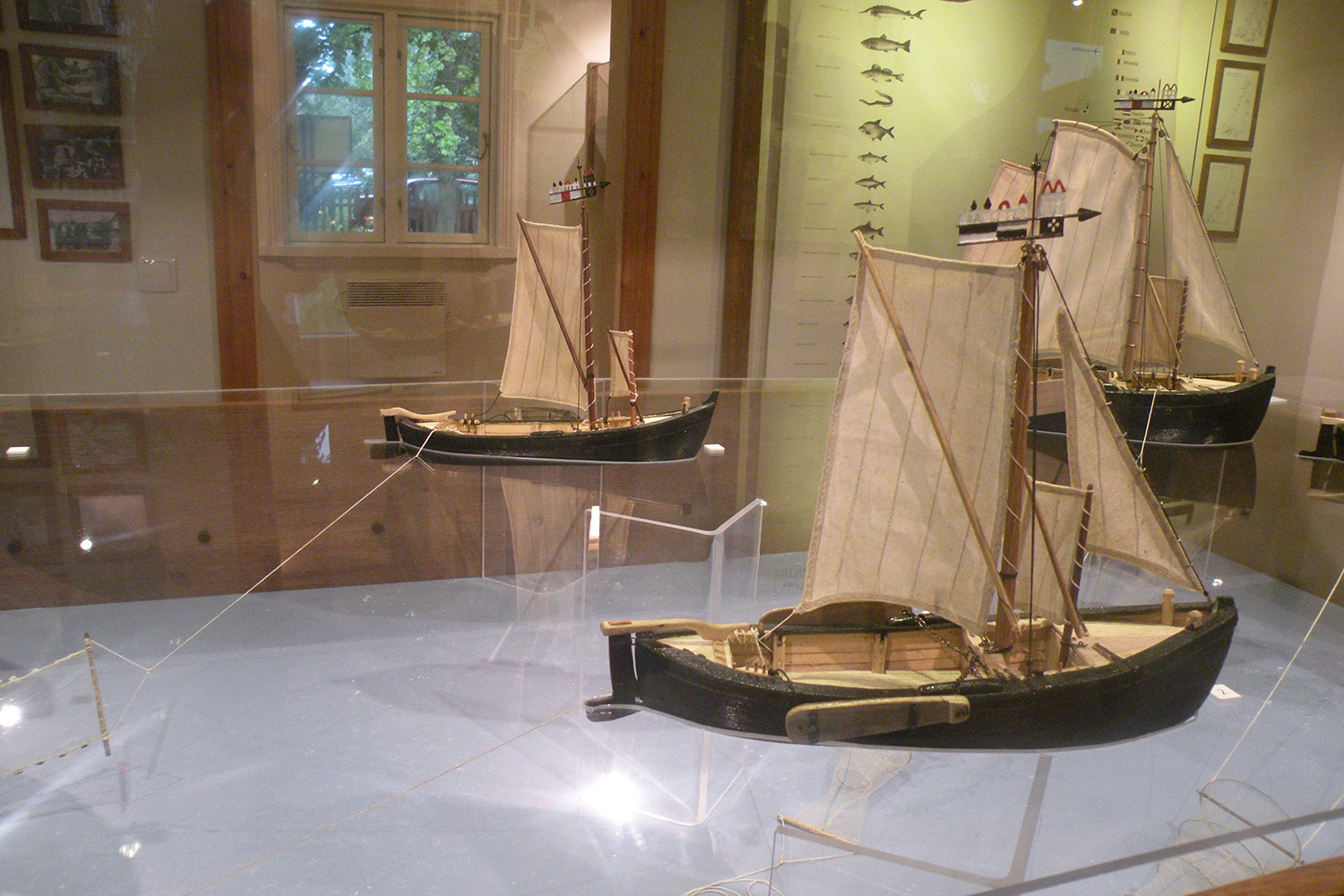
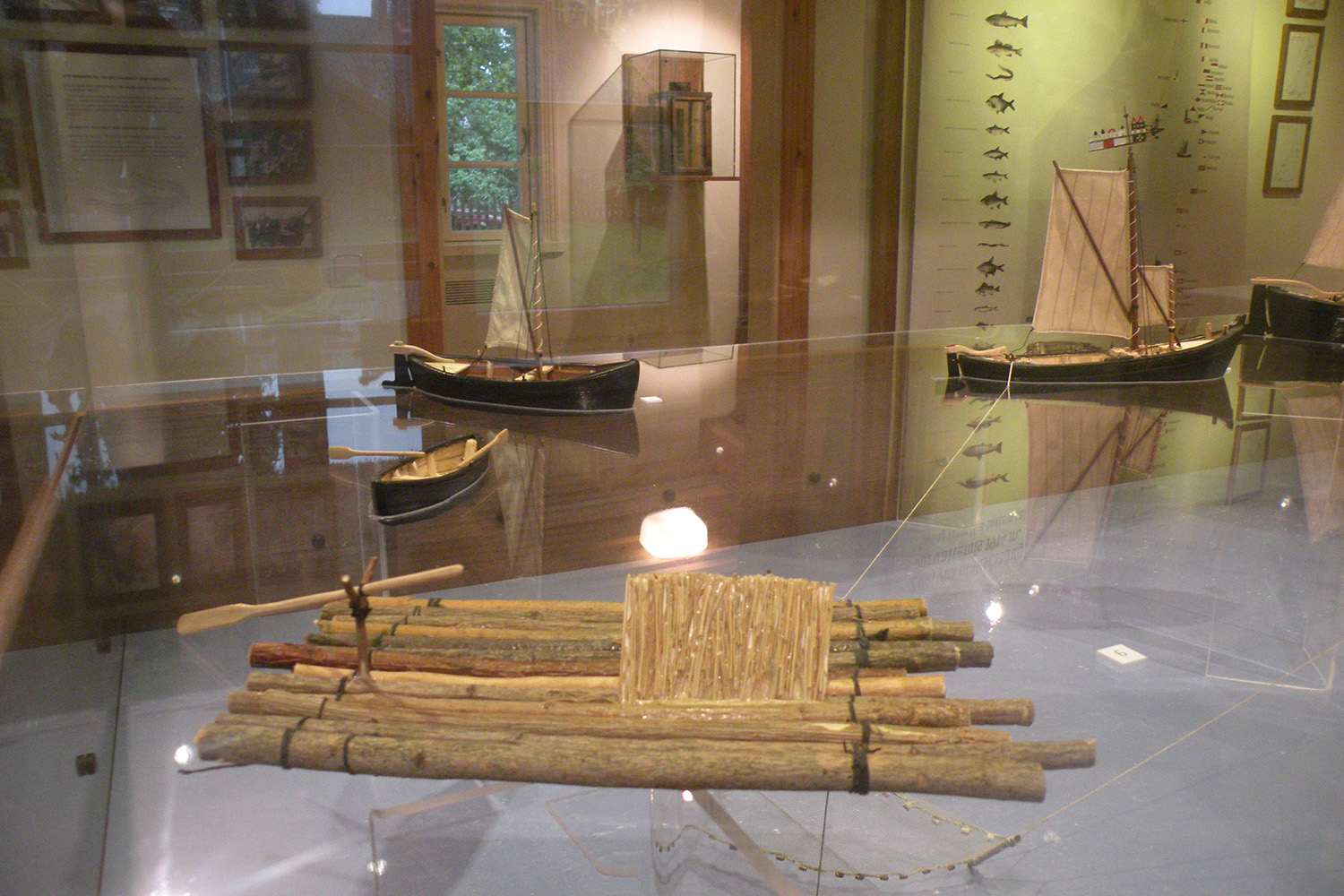
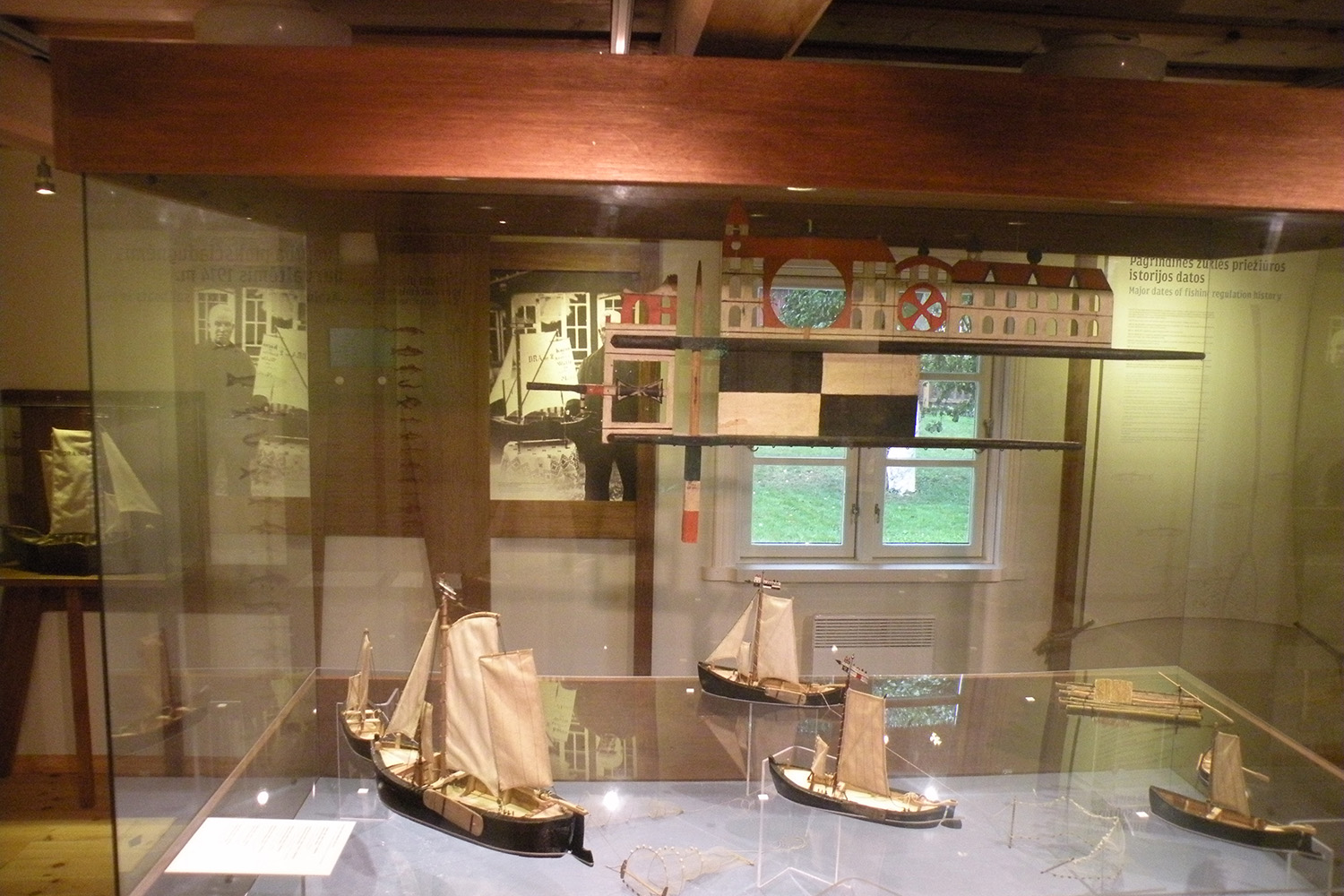
Antrojoje dalyje pasakojama apie Kuršių marių plokščiadugnes burvaltes, jų paskirtį ir konstrukciją. Čia eksponuojami autentiški burinių laivų modeliai – kurėnai, kiudelinės, bradinės ir venterinės valtys su žvejybos priemonėmis. Tarp vertingiausių eksponatų – paties Jono Gižo pagaminti laivų modeliai, kurių originalai šiandien saugomi Lietuvoje, Monako okeanografijos muziejuje ir Gižų šeimos palikuonių kolekcijoje.
Trečiojoje ekspozicijos dalyje atskleidžiama Kuršių marių vandens kelių reikšmė. Lankytojai susipažįsta su Vilhelmo kanalo istorija, laivyba, prekyba bei gyventojų kasdieniu susisiekimu vandeniu. Pasakojama, kaip burvaltėmis buvo gabenamas šienas, gyvuliai, statybinės medžiagos ir kaip žvejai pasiekdavo bažnyčią ar turgų.
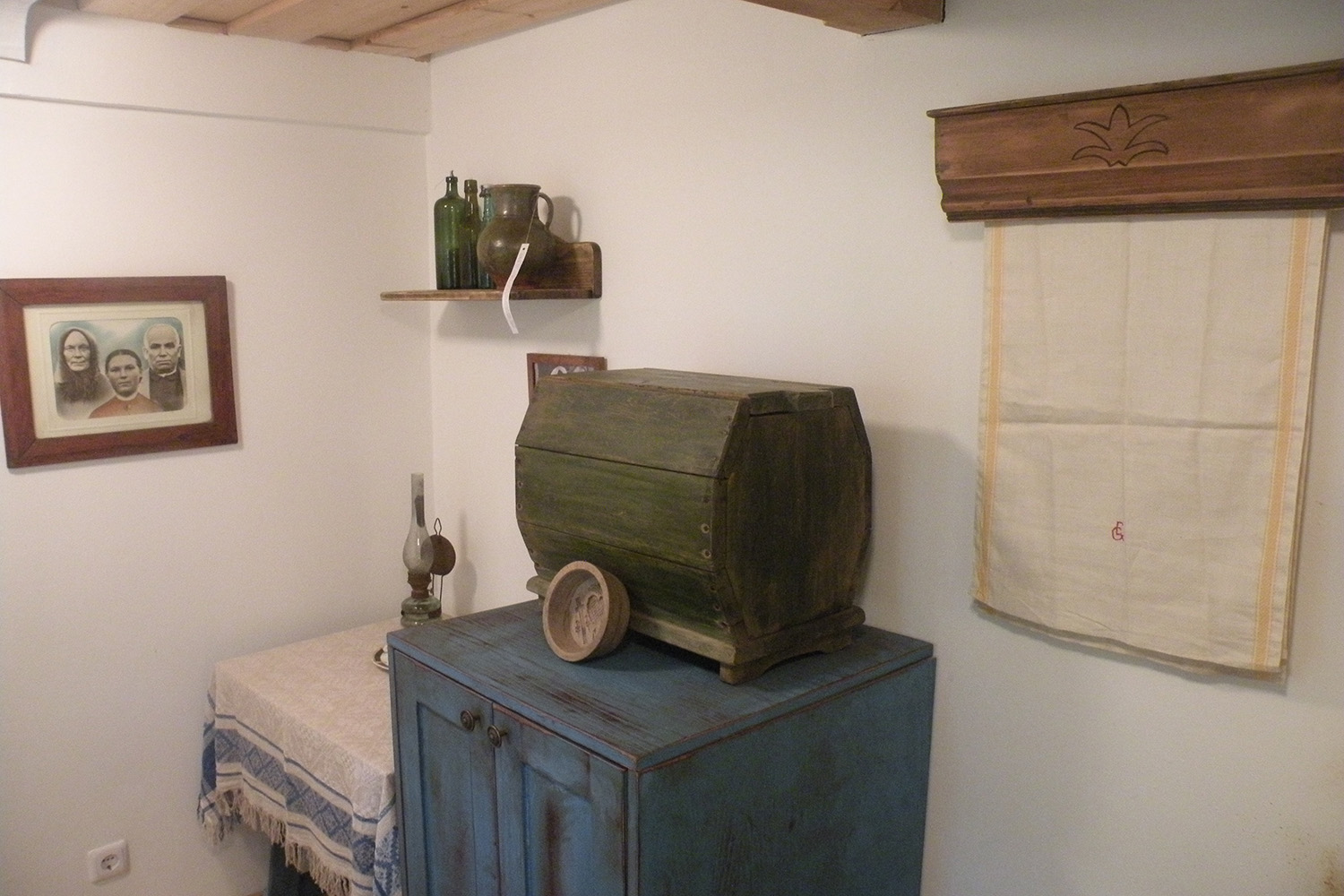
Ketvirtoji ekspozicijos erdvė nukelia į autentišką pamario šeimos buitį. Atkurtoje žvejytės virtuvėje eksponuojami baldai, indai, buities rakandai ir Gižų šeimai priklausę daiktai. Čia atsiskleidžia kasdienis pamario gyventojų gyvenimas, šeimos tradicijos bei Mažosios Lietuvos kultūrinis paveldas.
Muziejaus paslaugos
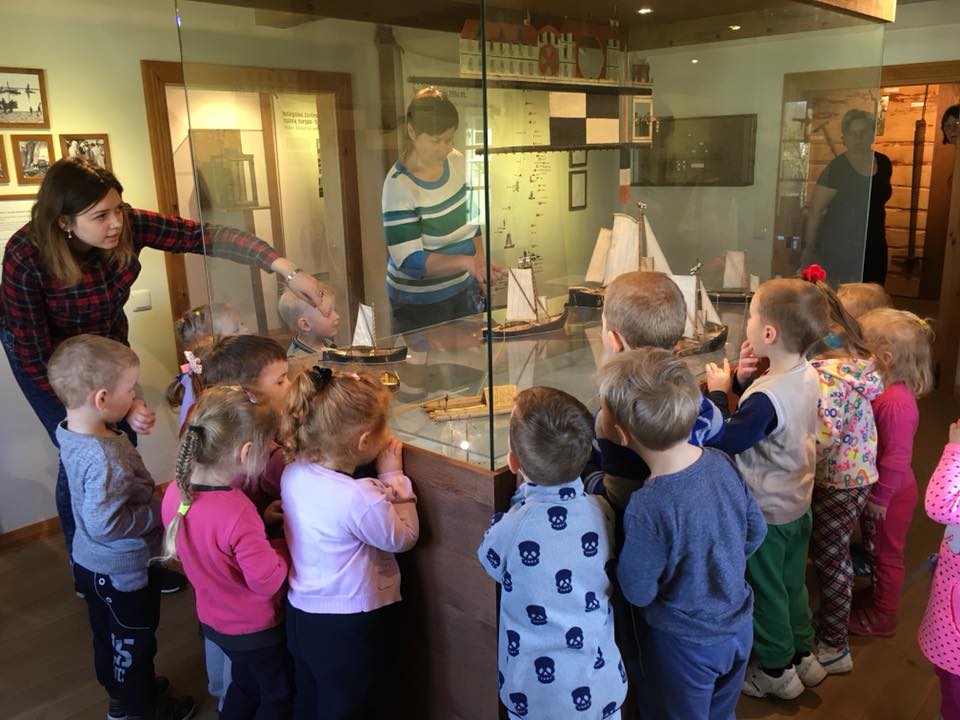
J. Gižo etnografinėje sodyboje organizuojamos ekskursijos, edukaciniai užsiėmimai, kultūriniai renginiai ir šeimų veiklos. Lankytojai kviečiami pažinti tradicinę laivadirbystę, Kuršių marių žvejybos istoriją bei Mažosios Lietuvos etnokultūrą.
Viena populiariausių edukacijų – „Mūsų vėtrungė“, kurios metu dalyviai iš medinių detalių kuria ir dekoruoja savo vėtrungę, ją parsiveždami kaip prisiminimą apie apsilankymą muziejuje. Taip pat organizuojamos edukacijos apie pamario krašto tradicijas, laivadirbystę, žvejybą ir Mažosios Lietuvos kultūros paveldą.
Nuotraukos iš Gargždų krašto muziejaus skaitmeninio archyvo.
EN
The exhibition "J. Gižas. Opening the Shipbuilder's Chest" invites visitors to discover the unique cultural heritage of the Curonian Spit, the Curonian Lagoon, and Lithuania Minor. Located at the Jonas Gižas Ethnographic Homestead Museum in Dreverna, the exhibition presents the life and work of the renowned shipbuilder Jonas Gižas (1867–1940), whose craftsmanship played an important role in preserving the traditional boatbuilding culture of the Klaipėda Region.
Visitors can explore traditional wooden boatbuilding techniques, authentic shipbuilder's tools, historic fishing boats, and models of Curonian Lagoon sailing vessels. The exhibition also introduces the daily life of local fishermen and their families through reconstructed interiors, historical photographs, original artefacts, and interactive displays.
The exhibition offers an opportunity to experience the rich cultural traditions of the Curonian Spit and the Curonian Lagoon, learn about the history of Lithuania Minor, and discover one of Lithuania's most significant ethnographic museums dedicated to traditional shipbuilding and the heritage of the Klaipėda Region.
Homestead history
The museum was established at the junction of the XIX-XX century, on the north side of a plot owned by two owners. After moving to Dreverna, a shipbuilder Jonas Gižas acquired the southern part of this plot. Here, in 1895-1911, he built a two-end house and later a red brick stable. In the 1930s, the shipbuilder acquired the northern part of the plot. It already housed a house and a stable and a well with a lever. Later workshops and a fish smokehouse were built. The northern part of the plot was donated to his daughter Eva. In 1947, his son Wilhelm was exiled to Siberia and the southern part of the plot was confiscated. The house became a collective farm office and the stable became a warehouse. A museum was established in the house owned by Eva where she lived until 1993. After Eva's death, the homestead was abandoned and the museum was established in 2010.
The family of Jonas Gižas
Jonas Gižas (05 07 1867 - 31 01 1940)
The shipbuilder was born in Ventė. He travelled while building boats. In about 1895 he married Eva Trauschies (31 05 1875 - 23 03 1937) in Dreverna. Her father Martin Triaushies was the elder of the rural community. J. Gižas built a house, a workshop. Smaller boats were built in the yard. The big ones were built on the shore of the lagoon for fishermen of Mingė, Juodkrantė and Nida.
On July 17, 1927, at the Agriculture, Crafts and Industry Exhibition in Klaipėda, J. Gižas received a 5th-place diploma and a 50 Lt. prize for the production of various fishing boat models. When his eldest daughter Jedwig (Hedwig) was getting married to Ventė, he built a Kurenkahn and Kidel boats. In old age he devoted himself to production of sailboat models.
Sons:
Wilhelm (1901-28 01 1961) married Anna Schaukellies in 1934, had one son and three daughters. They left to Germany.
Johann (27 04 1905) left to Germany.
Martin (07 12 1910-2005) married Eva Egling (12 09 1914 -2007) on May 20, 1936. They left to Germany.
Daughters:
Hedvig (1899-1972) married Jurgis Stars (07 03 1897) on April 24, 1924 and had sons Johann and Martin. All of them are buried in Dreverna Cemetery.
Else (1903-2000) married in 1931. She had three sons and two daughters. She lived in Germany.
Eva (07 08 1907- autumn of 1993) lived in Dreverna and had no offspring. She was buried in Dreverna Cemetery.
Maria (1916-1932) was buried in Dreverna Cemetery.
The most important sailing sites
The scheme highlights the most important construction and repair centres of the beginning of the 20th century. Labagynas, Labguva, Rusnė, Dreverna, Klaipėda. There were as many as five ship and sailboat building yards in Labguva. The choice of timber floated by the Nemunas has made this town the largest shipbuilding centre for lagoon and river ships.
Parts of the Curonian Lagoon sailboat
Oak boards were bent when exposed to heat and water vapour. When placing the boards in a special frame, weights were placed on the end. The rising steam softened the wood and they took the required shape.
The ships were heavy, so large sailboats were built on the shores of the lagoon to make it easy to push into the water when built. A shipbuilder would put the tools in the box and go to the customer. The original toolbox of J. Gižas was preserved by his daughter Eva. 3-4 ships were built during the season. The ship lasted for 70 years and cost as much as a dwelling house.
During winters, when ships were not built, the shipbuilder was engaged in carpentry. J. Gižas' work table is situated by the wall. Working tools - are copies of J. Gižas' tools, on which the initials of the owner are written in Gothic characters.
Boat types
The flat-bottomed lagoon sailboats were of the same construction. The sailboats differed only in function, size and minor details. The names of the ships came from the nets. It was fished in pairs, pulling a net by Kurėnas. Around 1960, wooden sailboats were replaced by motor ones.
Weather vanes
In 1844, a mandatory marking of sailboats has been introduced. A sign of contrasting colours was invented for each village in the Curonian Lagoon. Lines, crosses, diamonds, rectangles, triangles - a total of 70 geometric shapes were provided for specific areas, indicating the fishing area. Fishermen had to raise the weather vane at the top of their sail mast. The original weather vane made by J. Gižas belonging to a Nida fisherman hangs in the exposition. Weather vanes are typical only for the Curonian Lagoon region.
At the end of the 19th century, weather vanes lost their original purpose of marking boats. However, fishermen continued to lift a weather vane onto the masts of the sailboats, already like wind vanes, to determine the direction of the wind. The ships were adorned with weather vanes while flat-bottomed boats were sailing in the lagoon.
In the period of 1945-1959, fishing in the Curonian Lagoon went without restrictions. Intensive fishing has severely reduced fish stock and threatened an ecological catastrophe. In 1960, restrictions on fishing during spawning have been introduced, fishing quotas were set. There was a fight against poaching.
Ice fishing
In the Curonian Lagoon it was fished in an archaic way reminiscent of the Stone Age. A special long-handled axe with an extended shoulder was used to cut 2 plowshares. A net was let into one of them and a board into another one. The same rhythm was beaten. Passing by scared fish rushed to the side and was caught in nets. The caught fish and accessories were transported by sledges or sailing ice sleds.
Lagoon traveling sailboats
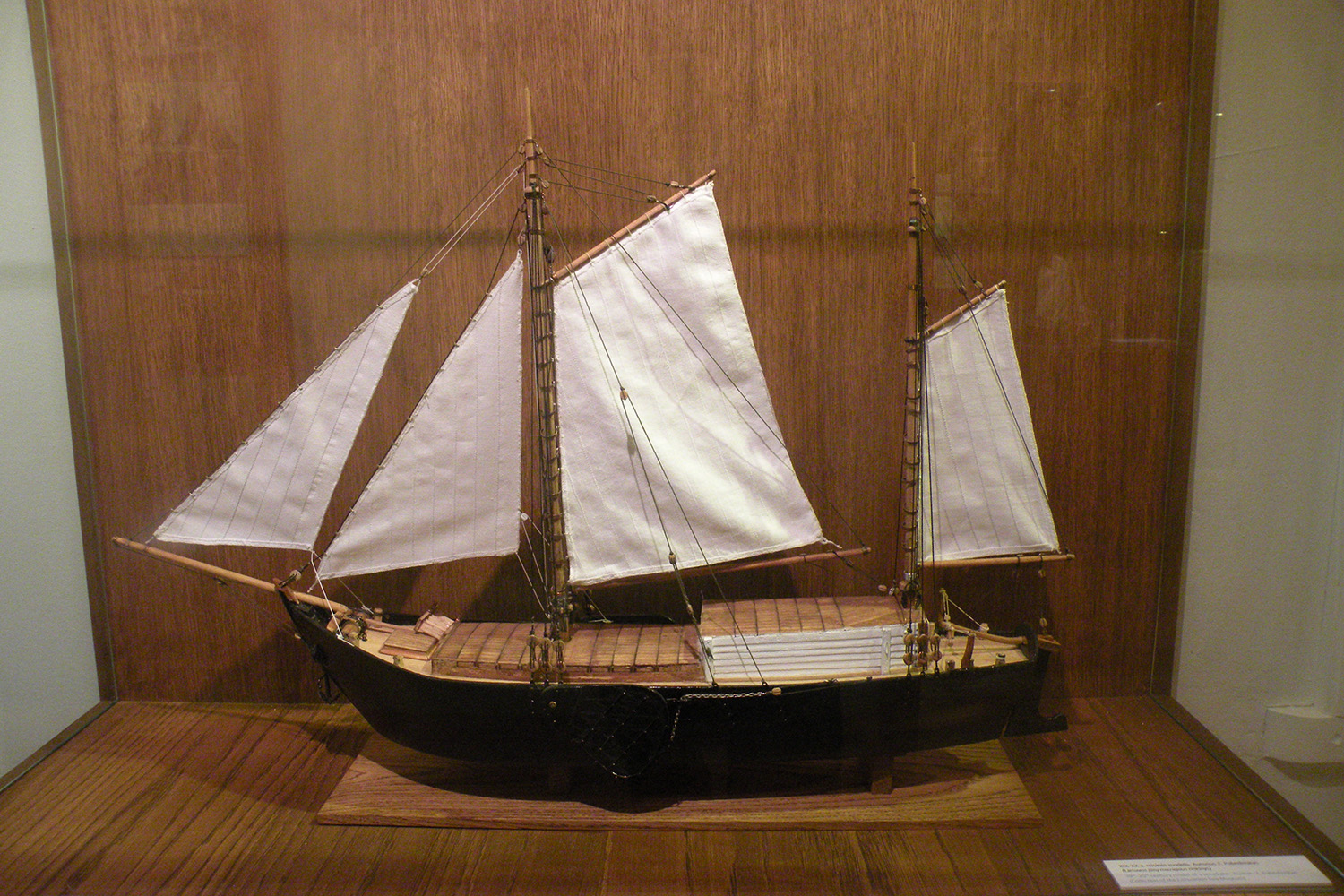
At the beginning of XIX-XX century various cargoes were plugged with baidokai and reisinė to the Curonian Lagoon from the Nemunas and Prieglius basins by rivers and canals. The 40-50 m long baidokai had two or three masts. Depending on the load (timber, construction materials, agricultural products) open or closed holds were used. The crew of such ships consisted of 2-3 river shipping workers (upeiviai). It was customary for the helmsman's family to live in cramped spaces at the stern.
In the photo you can see J. Gižas with a reisinė model. There are 3 original shipbuilder‘s models that have survived. One is preserved in the Lithuanian Maritime Museum, another one in the Monaco Oceanographic Museum and yet another was preserved by J. Gižas' grandson living in Germany.
Wilhelm Canal
King Wilhelm's Canal is 25-27 km long and 28-30 m wide and 1.7 m deep. The idea of adapting the Minija River to navigation was stimulated by the dangers of the Curonian Lagoon like strong winds, alternating currents, sediments. The most dangerous place is the Cape of Ventė. In 1639, an idea was raised to connect the Dreverna River with the Minija River and dig a canal to the port of Klaipėda. However, it was realized only 200 years after a major storm that caused a loss of 70,000 thalers.
In 1863, excavation of the canal began and in October of the same year the section Dreverna-Minija River was opened. A sluice for regulating the water level was built in Lankupiai. In 1865, emphasizing the contribution of the monarch, the canal was named after King Wilhelm. Mercenaries and criminals worked in the excavations as well as French prisoners of war since 1870.
In September 1873, the canal was completed and opened. Canal shipping continued to grow. Until 1904, 10 metal bridges with a raising centre were built through the canal. Homesteads of canal supervisors were located by the canal.
Strykis - an illegal market
An illegal market was set up at the confluence of the Dreverna River with King Wilhelm Canal. Good strategic location - by the road from Kintai through Dreverna to Priekulė and easily accessible by boat from the Curonian Spit or the Nemunas Delta. A pub was built there and a settlement began to develop. However, after the merchants of Priekulė and Klaipėda complained, the market was closed and the settlement disappeared. Later, a canal supervisor’s house was built on the site.
Kitchenette
A woman, having stayed on the shore, spun in the kitchen. Here, a woman did chores of the day, waiting for a man to return from a workshop or exhausting fishing.
Open cupboards were used in Klaipėda region. The dishes used, were made of beautiful porcelain. It used to be brought from England, Germany. Therefore, they were proud of them and showed off. There was a tradition to drink kafija (coffee drink made from acorn, barley, chicory) at 4 pm. On the stove there are coal-fired irons, a kerosene lamp. A towel of daughter Eva hangs in the place for towels.
An interestingly shaped butter-beating-tool stands on the cabinet as well as a form of butter to form pieces of butter for carriage to the market. The shape of the butter form depicts a heart - love, a cross – faith and an anchor - the hope that fishermen will return home.
The chair was made by J. Gižas himself. The back of the chair replicates the shape of old tombstones - krikštai.
RU
Экспозиция «Й. Гижас. Открыв сундук корабельного мастера» приглашает познакомиться с уникальным культурным наследием Куршской косы, Куршского залива и Малой Литвы. Экспозиция расположена в этнографической усадьбе корабельного мастера Йонаса Гижаса в Древерне и рассказывает о жизни и творчестве знаменитого мастера-лодочника Йонаса Гижаса (1867–1940), внёсшего значительный вклад в развитие традиционного судостроения Клайпедского края.
Посетители могут познакомиться с традиционными технологиями строительства деревянных лодок, увидеть подлинные инструменты корабельного мастера, исторические рыбацкие суда и модели парусных лодок Куршского залива. Экспозиция также знакомит с повседневной жизнью рыбаков и их семей через восстановленные интерьеры, исторические фотографии, подлинные экспонаты и современные интерактивные элементы.
Экспозиция позволяет глубже узнать культурное наследие Куршской косы и Куршского залива, историю Малой Литвы, традиции деревянного судостроения и познакомиться с одной из самых значимых этнографических музейных экспозиций Литвы, посвящённых корабельному ремеслу и культуре Клайпедского края.
История усадьбы
Музей был основан на стыке XIX-XX вв. на северной стороне участка, принадлежащего двум хозяевам. Приехавший в Древерну кораблестроитель Йонас Гижас приобрёл южную часть этого участка. Тут в 1895 – 1911 гг. он построил дом с двумя концами, а позже хлев из красных кирпичей. В третьем десятилетии XX в. кораблестроитель приобрёл северную часть участка. На нем уже были построены дом и хлев, также колодец с журавлём. Позже были построены мастерская и рыбокоптильня. Северную часть участка подарил дочери Еве. В 1947 году сын Вильгельм был сослан в Сибирь, а южная часть участка конфискована. В доме расположилась контора колхоза, а в хлеву – склад. Музей расположился в доме, который принадлежал Еве, где она прожила до 1993 года. После смерти Евы усадьба была запущена, а в 2010 году там открылся музей.
Семья Йонаса Гижаса
Йонас Гижас (05.07.1867–31.01.1940)
Кораблестроитель родился в Венте. Путешествовал строя лодки. Около 1985 года в Древерне женился на Еве Траушиес (Evа Trauschies) (31.05.1875–23.03.1937). Её отец Мартин Траушиес (Martin Triaushies) был старостой деревенской общины. Й. Гижас построил дома, мастерскую. Небольшие лодки строил во дворе. Более большие лодки для рыболовов из Минге, Юодкранте, Ниды строил на берегу моря.
17 июля 1927 г. на выставке сельского хозяйства, ремёсел и промышленности Й. Гижас получил диплом за 5-ое место и премию размером в 50 литов за построенные им разные модели рыболовных лодок. Для старшей дочери Ядвиги (Hedwig), которая вышла замуж в Венте, в качестве приданного построил лодки корно (korno) и кюделё (kiudelio). В старости посвятил себя производству моделей парусных судов.
Сыновья:
Вильгельм (Wilhelm) (28.01.1901–1961) в 1934 г. женился на Анне Шаукелиес (Anna Schaukellies), в браке родились один сын и три дочери. Уехал в Германию.
Йохан (Johann) (27.04.1905). Уехал в Германию.
Мартин (Martin) (07.12.1910–2005) 20 05 1936 женился на Еве Энглинг (Evą Egling) (12.09.1914–2007). Уехал в Германию.
Дочери:
Ядвига (Hedwig) (1899–1972) 24.04.1924 вышла замуж за Юргиса Старс (07.03.1897), родила сыновей Йохана и Мартина. Все похоронены на кладбище в Древерне.
Эльза (Else) (1903–2000) в 1931 г. вышла замуж, родила троих сыновей и двух дочерей. Проживала в Германии.
Ева (Eva) (07.08.1907–осень 1993) проживала в Древерне, потомков не имела. Похоронена на кладбище в Древерне.
Мария (Мaria) (1916–1932). Похоронена на кладбище в Древерне.
Главные места строительства парусных суден.
На схеме отмечены главные центры строительства и ремонта в начале XX века. Лабагинас, Лабгува, Русне, Древерна, Клайпеда. В Лабгуве действовало целых пять верфей кораблей и парусных судов. Выбор древесины, доставленной по Неману, сделал этот город самым крупным центром строительства речных и морских кораблей.
Части парусных судов Куршского залива
Дубовые доски бортов сгибались, воздействуя на них жаром и водяным паром. Вставив доски в специальную раму, на конец накладывались тяжести. Поднимающийся пар смягчал древесину и таким образом получали нужную форму.
Корабли были тяжёлые, поэтому большие парусные судна строились на берегу моря, чтобы потом было легче спустить их на воду. Кораблестроитель складывал инструменты в коробку и отправлялся к заказчику. Коробка для инструментов Й. Гижаса является оригинальной, её сохранила дочь Ева. За сезон он строил 3-4 корабля. Корабль служил 70 лет и стоил столько же, сколько и дом.
Зимой, когда не строил корабли, кораблестроитель занимался столярными работами. Возле стены стоит рабочий стол Й. Гижаса. Рабочие инструменты – это копии инструментов Й. Гижаса, на которых готическими письменами выписаны инициалы владельца.
Типы кораблей
Морские парусники с плоским дном по своей конструкции были одинаковыми. Парусники различались только по функции, размеру и незначительным деталям. Названия для кораблей произошли от сетей. На куренасе рыбачили, вытягивая сеть вдвоём. Около 1960 г. деревянные парусные корабли заменили моторными.
Флюгера
В 1844 г. было введено обязательное обозначение парусников. Для каждой деревни Куршского залива был придуман знак контрастных цветов. Линии, кресты, ромбы, прямоугольники, треугольники – всего 70 геометрических фигур – были предусмотрены для конкретных местностей, указана площадь для рыбалки. Рыбаки должны были поднимать флюгера наверх мачты парусника. В экспозиции представлен оригинальный флюгер, сделанный Й. Гижасом, который принадлежал рыболову из Ниды. Флюгера характерны только для региона Куршского залива.
В конце XIX века флюгера потеряли своё изначальное предназначение – обозначение лодок. Но рыбаки по-прежнему поднимали их на мачту парусников в качестве ветроуказателей, для установления направления ветра. Корабли украшали флюгерами до тех пор, пока плоскодонные лодки ходили по морю.
В 1945 – 1959 гг. в Куршском заливе рыбачили без ограничений. Интенсивная рыбалка сильно уменьшило количество рыбы, что угрожало экологической катастрофой. В 1960 г. снова введены ограничения на рыбалку во время нереста, установлены квоты на рыбалку. Боролись с браконьерством.
Подлёдная рыбалка
В Куршском заливе рыбачили архаичным методом, известным ещё с каменного века. Специальным топором с длинной рукояткой и удлинённым обухом вырубали две проруби. В одну опускали сеть, а в другую – доску. Её били в одинаковом ритме. Проплывающие мимо испуганные рыбы бросались в сторону и попадали в сети. Пойманную рыбу и принадлежности привозили на санях или на парусных буерах.
Рейсовые
В XIX веке – начале XX века. разные грузы из бассейнов Немана и Прегляус в Куршский залив по рекам и каналам переправляли на рейсовых и байдаках. Байдаки размером в 40–50 метров имели две или три мачты. В зависимости от груза (древесина, строительные материалы, сельскохозяйственная продукция) использовались либо открытые либо закрытые трюмы. Команда такого корабля состояла из 2-3 речников. Обычным дело было, что семья рулевого проживала в тесных помещениях, оборудованных на корме.
На фотографии Й. Гижас рядом с моделью рейсового. Сохранились три оригинальные модели, сделанные кораблестроителем. Одна находится в Морском музее Литвы, другая – в Музее океанографии в Монако и ещё одну сохранил внук Й. Гижаса, проживающий в Германии.
Канал Вильгельма
Длина канала Короля Вильгельма составляет 25–27 км, ширина – 28–30 м, глубина достигает 1,7 м. Опасности Куршского залива подтолкнули на мысли приспособить реку Минию для судоходства. Сильный ветер, меняющиеся течения, приносимые наносы. Самое опасное место находится около мыса Вентес рагас. В 1639 г. была выдвинута идея соединить реку Древерну и Минию и вырыть канал до Клайпедского порта. Но идею воплотили в жизнь только спустя 200 лет после сильной бури, нанёсшей убыток в размере 70 000 талеров.
К рытью канала приступили в 1863 г. и в октябре того же года был открыт отрезок Древерна – река Миния. В Ланкупяй построен шлюз для регулирования уровня воды. Желая подчеркнуть вклад монарха, в 1865 г. канал назван именем Короля Вильгельма. Рытьём канала занимались наёмники, преступники, а с 1870 г. и французские военнопленные.
В сентябре 1873 г. канал был закончен и открыт. Судоходство по каналу возрастало. До 1904 г. было построено десять металлических разводных мостов. Возле канала появились усадьбы семей смотрителей каналов.
Стрикис – нелегальный базар
В месте, где река Древерна встречается с каналом Короля Вильгельма, был основан нелегальный базар. Стратегически удачное место – возле дороги из Кинтай через Древерну в Прекуле, а также легко досягаемое на лодках из Куршской косы или дельты Немана. Здесь была построена корчма[1], стал появляться посёлок. Но после жалоб купцов из Прекуле и Клайпеды, базар был закрыт, исчез и посёлок. Позже в этом месте был построен дом смотрителя канала.
Кухонка
В кухне крутилась женщина, оставшаяся на берегу. Ожидая мужа из мастерской либо с изнурительной рыбалки, здесь целый день прибиралась женщина.
В Клайпедском крае использовались открытые шкафы для посуды. Используемая посуда была красивой, фарфоровой. Её привозили из Англии, Германии. Поэтому её показывали и ею гордились. Существовала традиция – в 16 часов дня пить кафию (кофейный напиток, приготовляемый из желудей, ячменя, цикория). На печи стоят утюги, разогреваемые углями, керосиновая лампа. На вешалке весит полотенце дочери Евы.
Маслобойка интересной формы стоит на шкафчике и форма для формирования кусков масла, чтоб отвезти его на базар. Форма в виде сердца – любовь, крест – вера, якорь – надежда, что рыбаки вернутся домой.
Стул, который изготовил сам Й. Гижас. Спинка стула повторяет форму старинных надгробий – Крикштаса.
[1] Трактир, постоялый двор